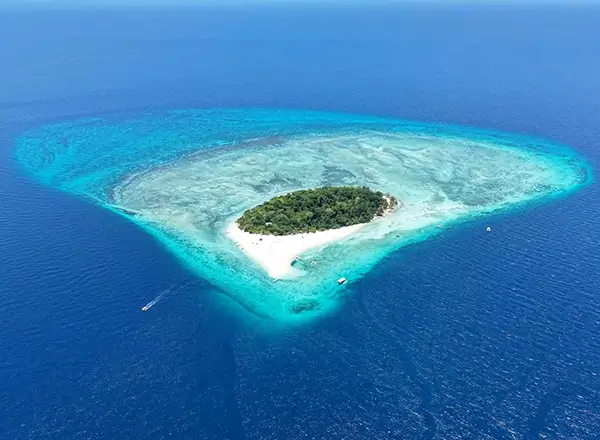
Green sea turtle swimming over coral reef at Mantigue Island Camiguin
Most Popular

Mantigue Island

📍 30 min by boat (~10 km) 🌊 Depth: 5–25m 🏅 All levels 👁️ Visibility: 15–30m

Underwater Environment

The waters around Mantigue Island are part of a protected marine sanctuary, featuring:

  • Healthy coral gardens with both hard and soft corals
  • Sandy slopes and reef edges suitable for relaxed dives
  • Excellent visibility, often ranging from 15 to 30 meters
  • Mild currents, depending on conditions

This combination creates a safe and visually rewarding environment for divers of all levels.

Marine Life

Divers can expect to encounter a wide variety of marine species, including:

  • Reef fish such as clownfish, angelfish, and butterflyfish
  • More than 20 green sea turtles live there, occasional sightings of huge size
  • Moray eels, reef squid, and nudibranchs
  • Schools of pelagic fish along the reef edges

The protected status of the area ensures a thriving and well-preserved underwater ecosystem.

Diving Activities

Mantigue Island is suitable for a range of diving experiences:

  • Discover Scuba Diving (DSD) – Ideal for beginners trying diving for the first time
  • Fun Dives – Relaxed reef dives with rich marine biodiversity
  • Training Dives – Perfect conditions for courses such as PADI Open Water and Advanced certifications
  • Snorkeling – Excellent shallow reef access for non-divers
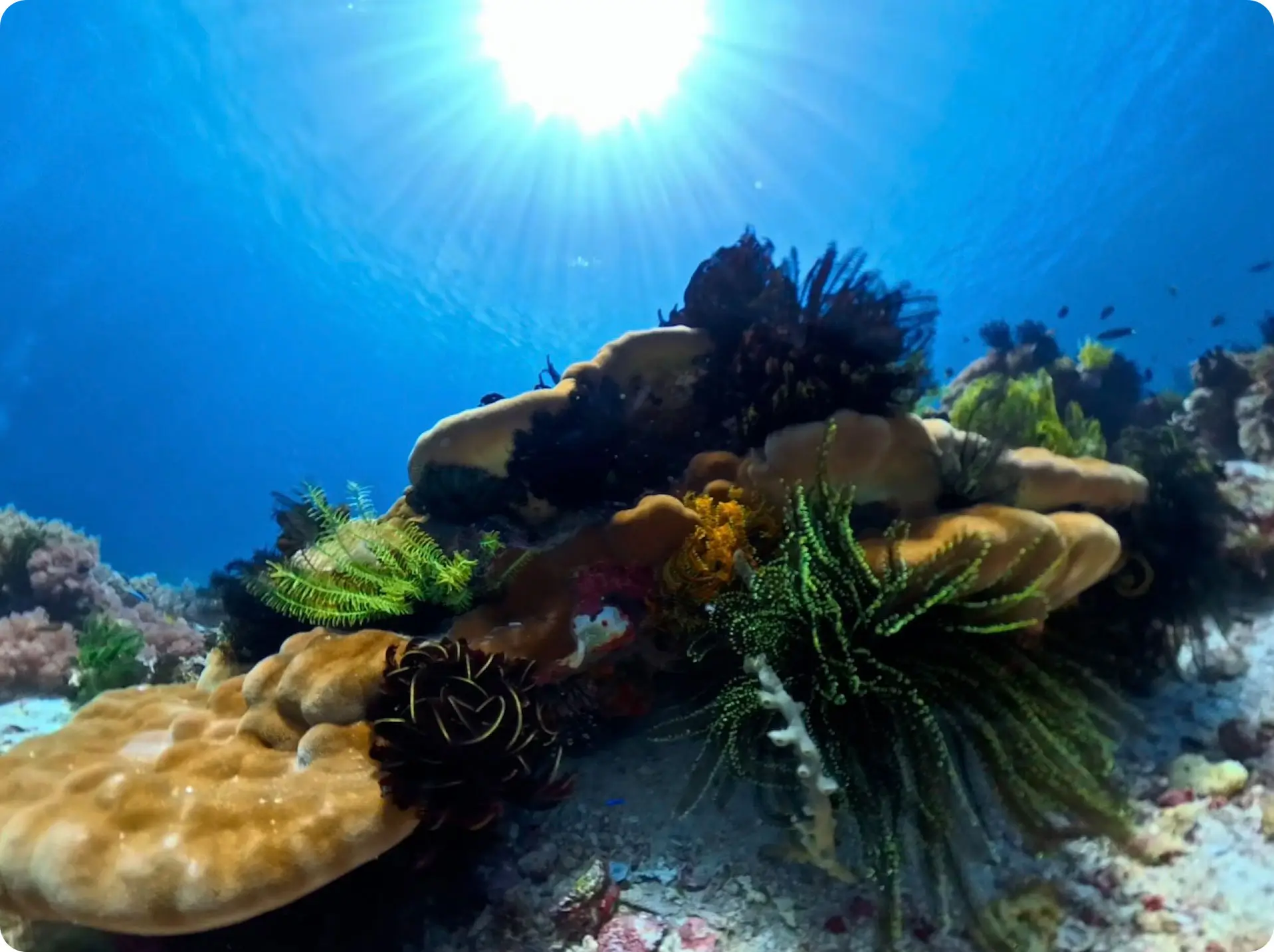
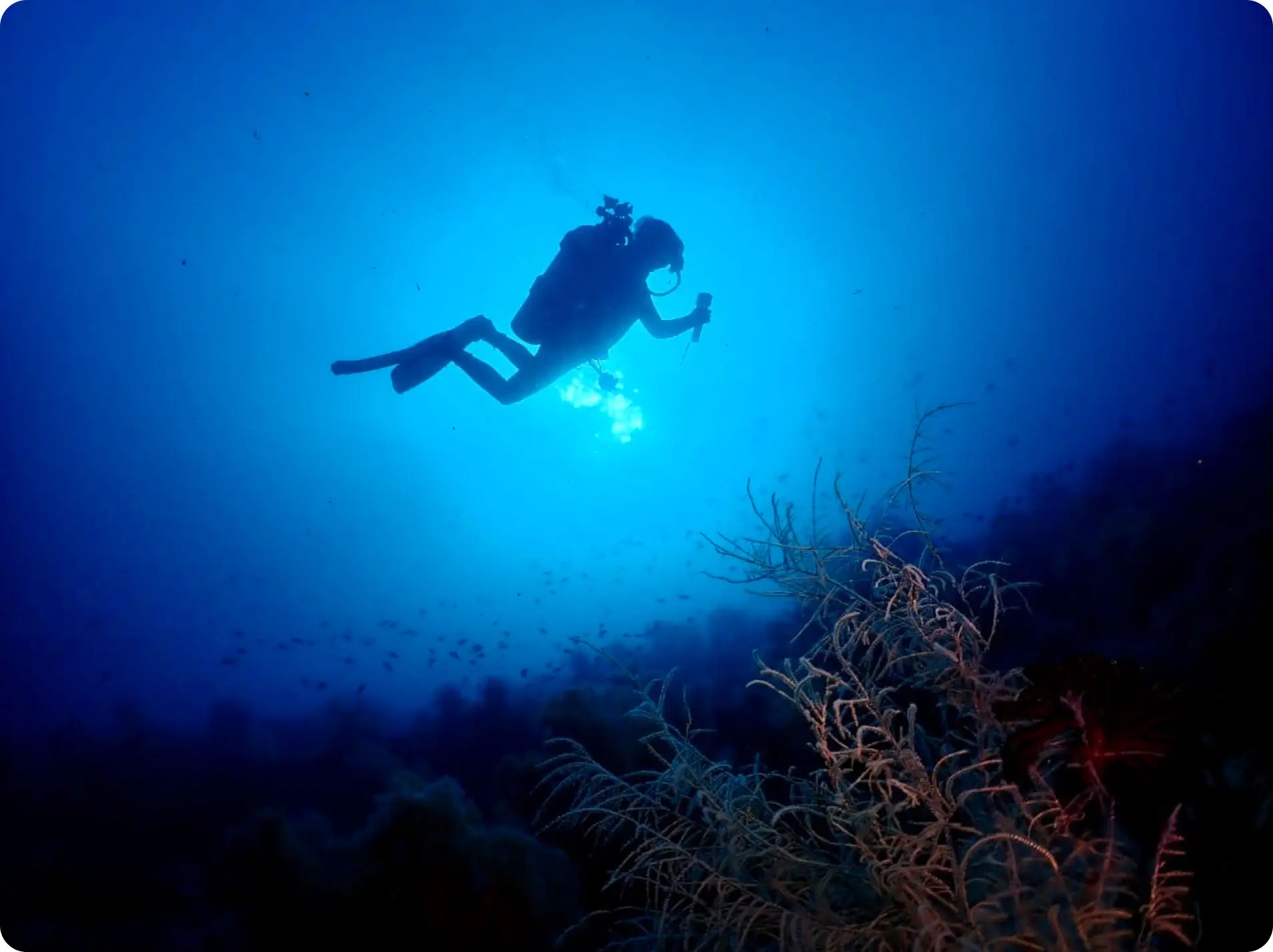
Diver exploring coral reef at Jigdup Shoal Camiguin
Unique

Jigdup Shoal

📍 20 min by boat 🌊 Depth: 5–30m+ 🏅 All levels 🪸 Slope & Wall

Underwater Environment

This is one of Camiguin's best coral sites:

  • Extensive hard coral formations (table corals, brain corals)
  • Colorful soft corals and sea fans on the deeper sections
  • Excellent reef health compared to many other areas

Jigdup Slope usually starts as a gentle coral slope (around 5–15 m), then gradually drops into a deeper wall. This structure makes it suitable for both shallow reef exploration and deeper dives.

Jigdup Wall is a stunning dive site where the reef starts at around 5 meters and drops steeply to about 40 meters. Near the end of the dive, there is a small open cave along the reef, extending vertically from about 18 to 13 meters, adding an interesting feature to explore.

Marine Life

Jigdup is known for higher biodiversity:

  • Schools of fusiliers and jacks
  • Butterflyfish, angelfish, parrotfish, and triggerfish
  • Nudibranch, frogfish, turtle
  • Tiger shark or reef shark passing by
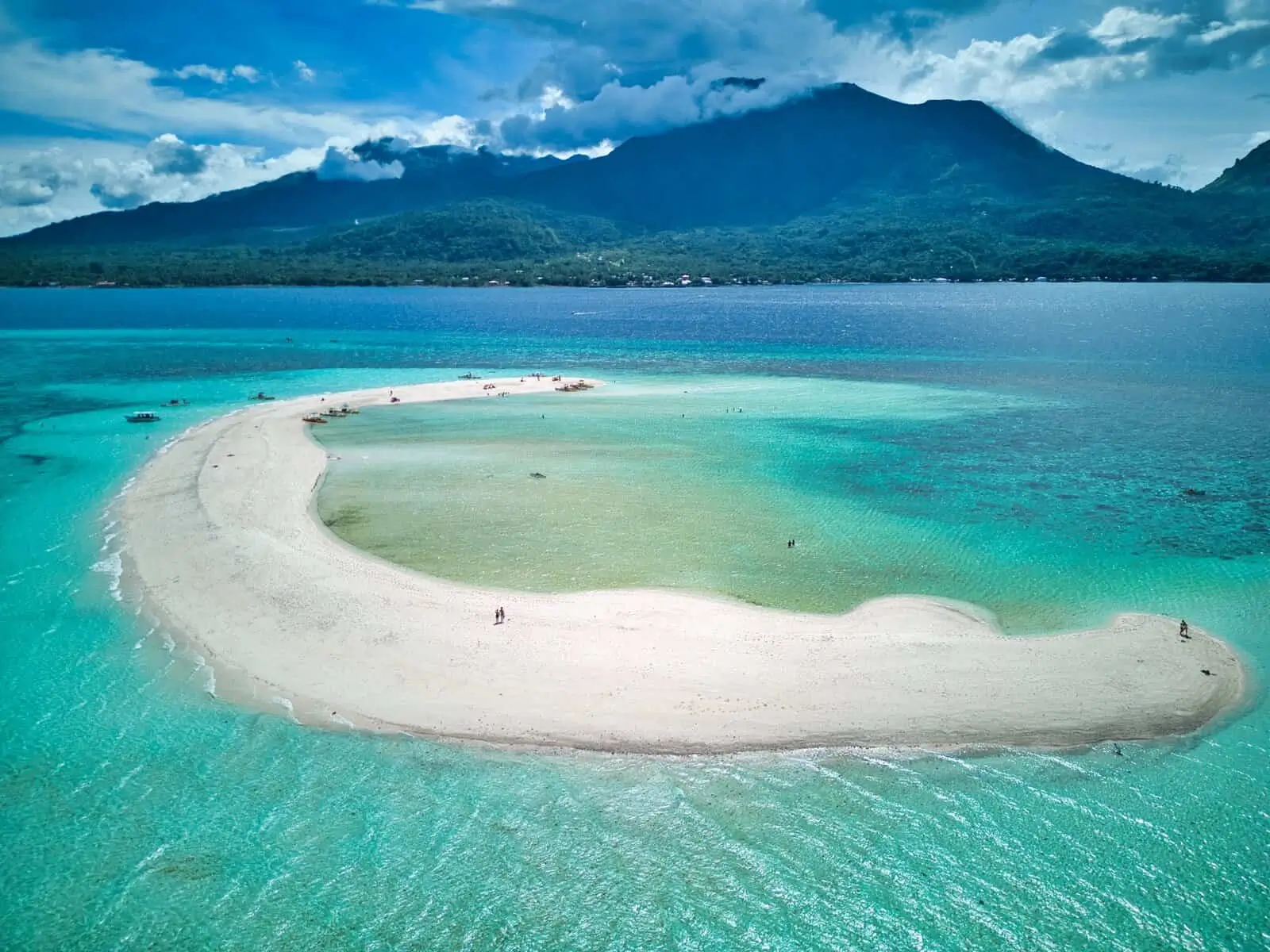
Black coral garden and staghorn coral at White Island Camiguin
Scenic

White Island

📍 40 min by boat 🌊 Depth: 6–25m 🏅 All levels 👁️ Visibility: 15–25m

Underwater Environment

White Island offers a gently sloping reef that begins in shallow water around 6 meters and gradually descends to about 25 meters, making it suitable for divers of all levels. The site is well known for its impressive black coral "forest," interspersed with healthy hard and soft coral formations that create a rich and textured underwater landscape. Visibility is typically good, often ranging from 15 to 30 meters, and mild to moderate currents can turn the dive into an enjoyable drift along the reef.

As you move along the slope, you'll encounter coral gardens, scattered bommies, and open sandy patches, with the reef structure providing plenty of overhangs, crevices, and hiding spots for marine life.

Marine Life

  • School of red snapper
  • Frogfish
  • Turtles
  • Nudibranchs
  • Moray eels
  • Sea snakes
  • Octopus
  • Occasional manta rays or whale shark
Thresher shark in deep blue water at Burias Shoal Camiguin
Advanced

Burias Shoal

📍 25 min by boat 🌊 Depth: 15–40m+ 🏅 Advanced divers 💨 Moderate to strong current

Underwater Environment

Burias Shoal is an offshore reef that rises from deeper water like a submerged seamount, creating a dynamic and exposed dive site. The top features coral bommies and reef patches with sandy channels in between, while the edges slope down into the blue. The structure is covered in healthy hard and soft corals, along with a distinctive black coral "forest," giving the site rich texture and depth.

Currents are often present—ranging from moderate to strong—bringing nutrient-rich water across the reef and especially known for big fish action and frequent pelagic encounters, making it one of the most exciting dive sites in the area. Due to its conditions and exposure, it is recommended for Advanced Open Water divers only.

Marine Life

  • Schools of jack fish and big eye
  • Barracuda and tuna in the blue
  • Occasional thresher sharks
  • Reef sharks (depending on conditions)
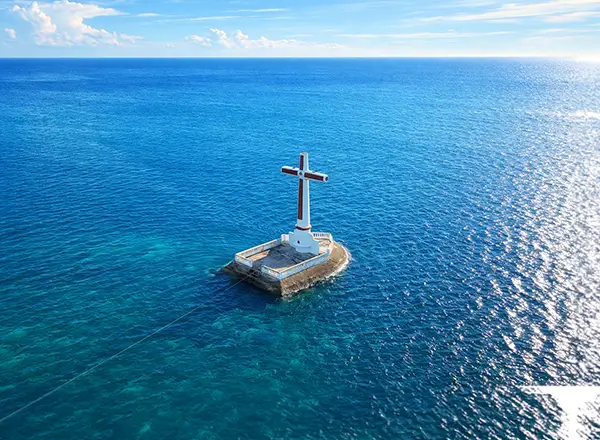
Underwater cross monument at Sunken Cemetery Camiguin with batfish
Historic

Sunken Cemetery

📍 60 min by boat 🌊 Depth: 5–20m 🏅 All levels 🌋 1871 Volcanic origin

Sunken Cemetery is one of the most atmospheric and historically unique dive sites in Camiguin. Formed after the 1871 eruption of Mount Vulcan, the old cemetery of Catarman now lies submerged beneath the sea. Underwater, divers can explore scattered gravestones, stone walls, and remnants of the old structure, now partially covered by corals and marine growth. Over time, these ruins have developed into an artificial reef, with soft corals, sponges, and patches of hard corals creating small but thriving ecosystems. The site is generally calm, with gentle conditions and a slightly silty seabed, giving it a quiet, surreal, and contemplative diving experience.

The combination of history and marine life makes this site especially unique, where encrusted ruins blend seamlessly with reef life, offering scenic photography opportunities.

Marine Life

  • Schools of batfish
  • Turtles resting along the reef
  • Pufferfish
  • Lionfish
  • Scorpionfish
  • Moray eels
  • Nudibranchs
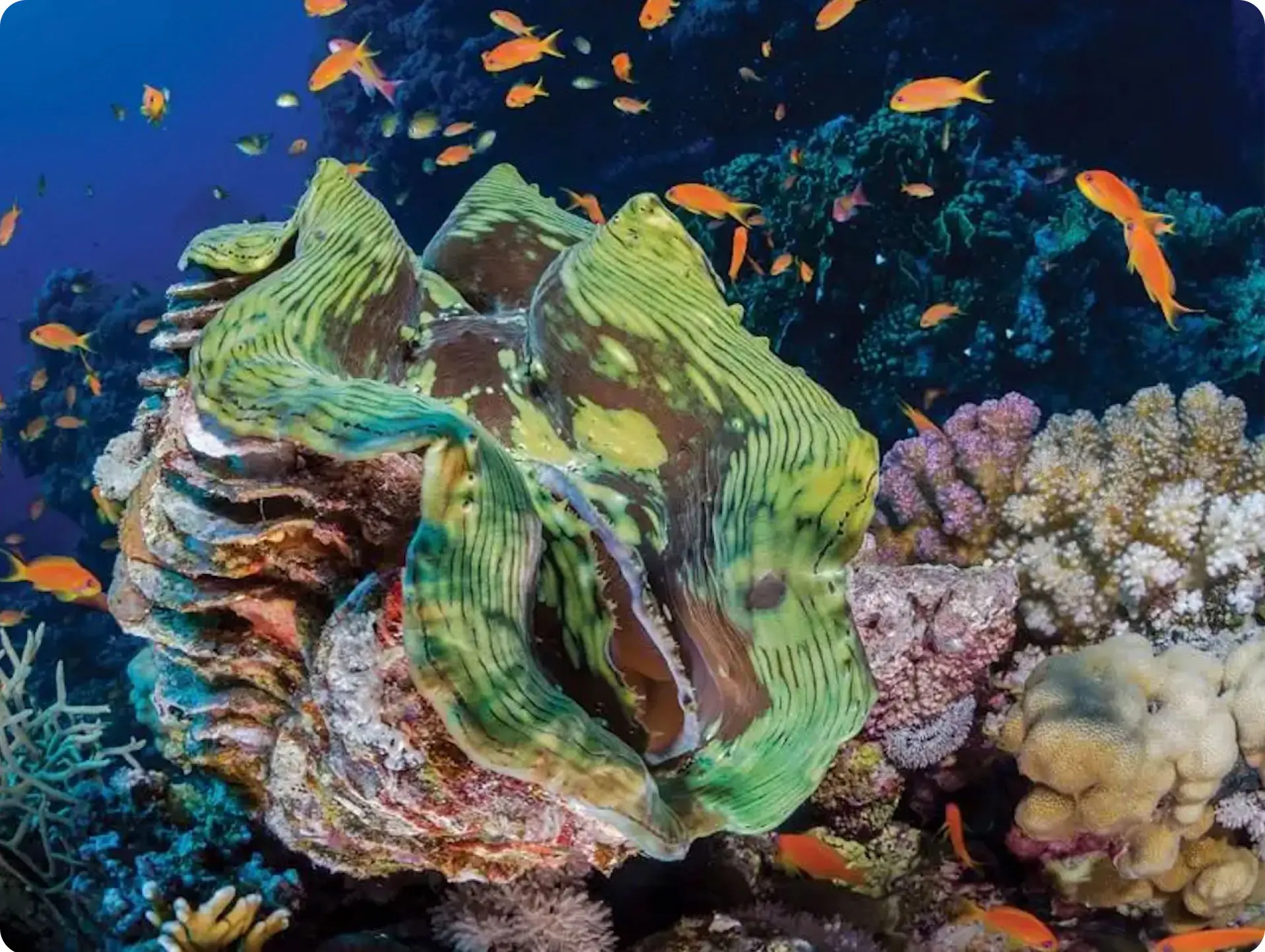
Giant clam on reef at Cabuan dive site Camiguin Island
Endangered Species

Cabuan / Giant Clam

📍 30 min by car 🌊 Depth: 3–18m 🏅 All levels

Underwater Environment

The giant clam is the largest bivalve mollusk in the world. It is listed in the Convention on International Trade in Endangered Species of Wild Fauna and Flora (CITS).

Cabuan is a protected reef site best known for its conservation focus and healthy coral environment. The area features a mix of soft coral , reef rubble, and sandy patches, creating a varied habitat that supports both macro life and larger reef activity. It is also an active conservation zone for giant clams, helping support their recovery in the region.

Marine Life

  • Giant Tridacna clams (up to over 1 meter, with iridescent mantles in blue, green, and brown)
  • Nudibranchs
  • Frogfish
  • Scorpionfish
  • Schools of snapper
  • Moray eels
  • Sea snakes

Ready to Explore These Sites?

Book your dives now via WhatsApp. We'll help you plan the perfect dive itinerary based on your level and interests.